Ever since AI Overviews rolled out, one of the most common questions in marketing communities has been: how do you rank in AI Overviews? Reports from Semrush, Ahrefs, and other publications have helped explore this. But what page-level optimizations can you make to improve your chances?
To answer this, I analyzed 219 pieces currently ranking in AI Overviews and studied their traits. These included:
- Cosine similarity of a search query with the page title
- Title length
- Word count
- Links (External, internal links, and backlinks)
- SERP position
- Domain authority
- Readability
Let’s dive into my findings, along with expert insights on what they might mean.
Methodology
I used ChatGPT to generate 100 random queries and recorded 2–4 content pieces ranking in AI Overviews for each query. Once I had the URLs, I ran them through Semrush and Screaming Frog to gather data on all variables.
After compiling a complete dataset, I used Python to calculate cosine similarity and perform data analysis and visualization. You can find the full dataset and analysis on GitHub.
The variables I collected include:
- Query
- Niche similarity
- Title length (characters)
- Title text (H1)
- Is the title a question
- Cosine similarity between the search term and the title
- Word count
- Number of external links
- Number of internal links
- Number of backlinks
- SERP position
- Domain Authority (DA)
- Readability score
Note: Some queries didn’t generate AI Overviews. I excluded YouTube videos, landing pages, and documentation from the dataset; only blog content is included.
Summary of key findings
- Higher cosine similarity between search terms and content titles strongly correlates with better SERP rankings, especially in the top 10 results.
- Low DA sites consistently produce easier-to-read content, with scores clustered around “Fairly Easy” and “Very Easy.”
- High and mid Domain Authority (DA) sites generally cluster around “Normal” readability.
- The most common content title length is 41–60 characters, representing 42.5% of all titles and aligning with SEO best practices.
- Over half (54.8%) of AI Overview content comes from high DA sites, while mid DA sites contribute 37.9%.
- 50.7% of websites appearing in AI Overviews have 100+ backlinks, and these sites also tend to rank above those with fewer backlinks.
- 55.5% of content ranking in AI Overviews has 30 or fewer external links, with 22.4% of AIO pages having just 0–10 external links.
- 71.2% of content ranking in AI Overviews has 10 or fewer internal links.
- 29.5% of content ranking in AI Overviews has a word count between 1,000 and 2,000 words.
High title-query cosine similarity wins SERP
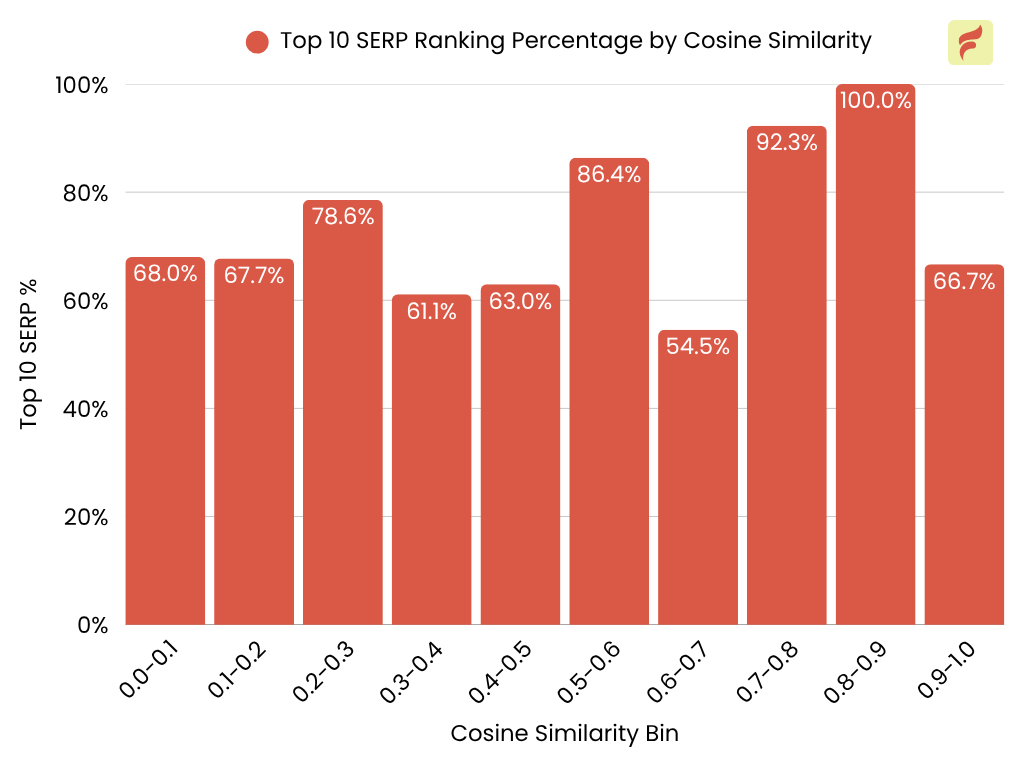
There is a strong positive correlation between higher cosine similarity (between the search term and content title) and the likelihood of ranking in the top 10 SERP positions.
The ratio of pages in the top 10 SERP positions increases significantly as cosine similarity rises, peaking at the 0.8–0.9 bin (92.3%) and reaching 100% in the 0.9–1.0 bin.
Lower cosine similarity bins (below 0.5) generally show a lower ratio of top 10 rankings, with a notable dip at 0.6–0.7 (54.5%).
Key takeaway: Traditional SEO is still worth it. Writing titles that closely match your target query will help you rank at the top of the SERP.
“We’ve seen better results with AI Overviews when our titles match what people really search for. Not just keywords, but the way they ask questions. So instead of using a title like ‘Cloud Modernization Benefits,’ we go with something closer to how someone might actually search. Like: Why move to the cloud now? Such natural, intent-driven phrasing has made a huge difference in how often we get picked by AI.” — Sanjay Barot, Senior Digital Marketing Strategist, Radix Web
Top-ranking content dominates AIOs
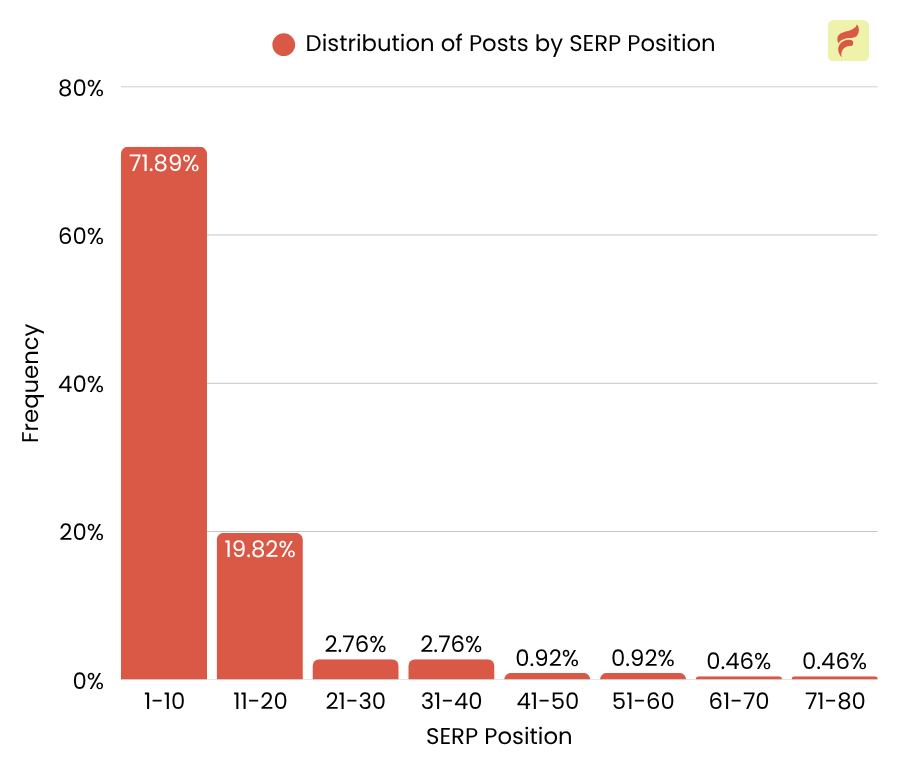
71.9% of content featured in AI Overviews ranks within the top 10 search results. This drops to just 19.8% for content in positions 11–20, and declines even further beyond that.
Key takeaway: Since high title-query cosine similarity boosts SERP rankings, and top-ranking content dominates AI Overviews, strategic keyword optimization and securing a top 10 position significantly increase your chances of appearing in AIOs.
“We noticed our content started appearing in AI Overviews only after we focused on boosting domain authority. The biggest shift came from earning backlinks from credible, niche-relevant sites, so think specialty coffee blogs, wellness publications and digital PR features. Google seems to favor domains that show both topical consistency and external trust signals. Even well-optimized content didn’t make the cut until our domain had that credibility.” — Mimi Nguyen, CEO and Co-Founder, Cafely
High-authority websites publish content with normal readability
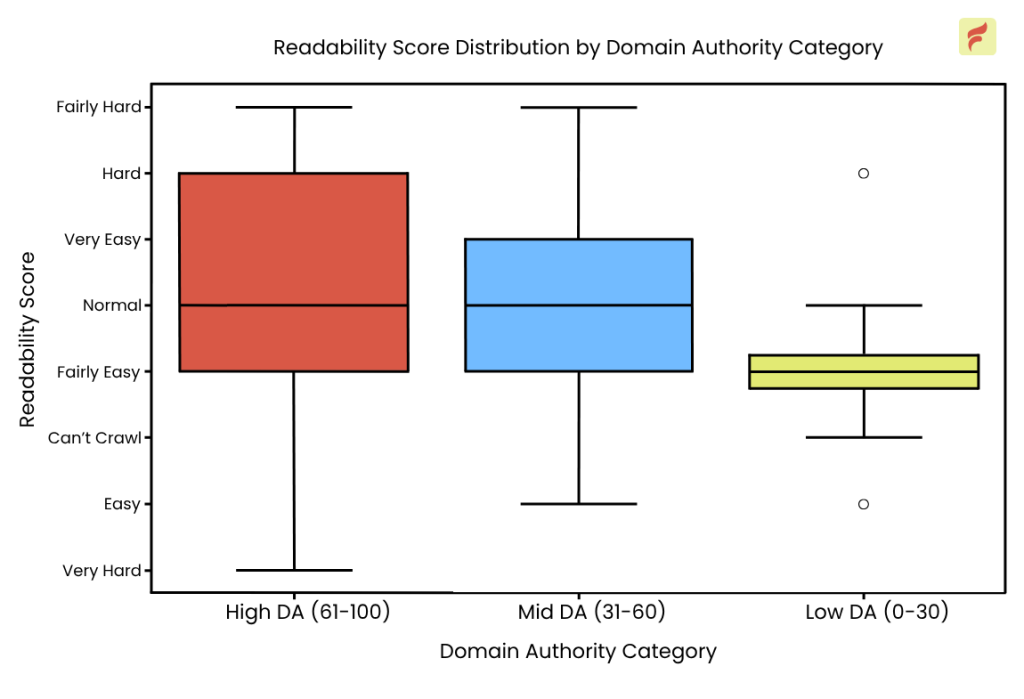
The median score for high authority and mid authority websites is around “Normal” readability, suggesting that most content from higher-authority sites is written at a moderate reading level.
The scores are tightly clustered around “Fairly Easy” and “Very Easy,” with a lower median compared to high and mid DA.
Low DA sites may need to compensate for their lack of authority by making their content as accessible as possible, aiming for higher readability scores to attract and retain users.
Key takeaway: The Normal readability for higher DA sites suggests that Google does not penalize moderately complex content from trusted sources. But lower DA sites might benefit from maximizing readability.
“I always write for readers who are at grade 9 or below.
The reason being is that doing so is what often helps people land in AI overviews, because the average reading grade level tends to be at about a high school level.
With that being said, so long as you’re being conversational, keeping sentence lengths short, and being aware of the type of user searching for your content, you can have some wiggle room with your reading level.
For example, we’ve ranked for content in the senior living industry by writing to a high school level reader, but for a greenhouse gas emissions verification team, we write at a college level, given that many of the readers are college-educated.
By being aware of your target audience’s demographics, you can better tailor content to rank in AI overviews. To whom this may concern.” — Aaron Wertheimer, SEO Marketing Copywriter, Marketing Reel
Titles between 41–60 characters rank most often in AI Overviews
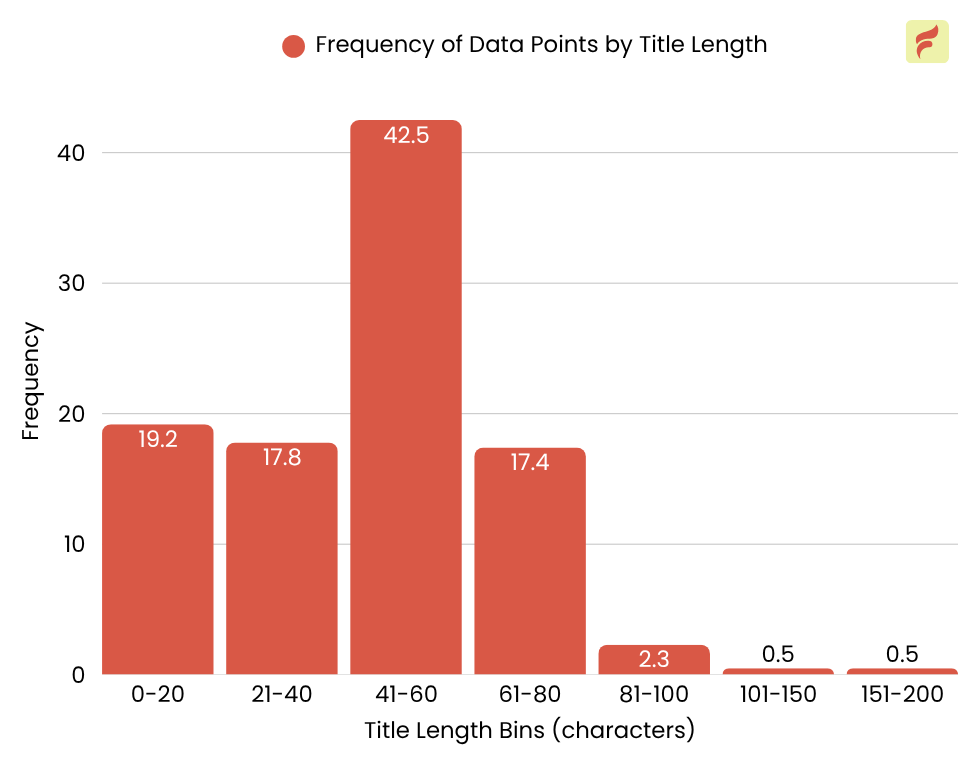
Titles with 41–60 characters are the most common, making up 42.5% of all data points. Titles with 21–40 characters (17.8%) and 61–80 characters (17.4%) are also relatively common.
Key takeaway: Most content creators aim for titles between 41 and 60 characters, reflecting industry best practices for SEO and user experience.
“One thing that helps me is making the title short and easy to understand. Not smart. Not cute. If you said honest things, people would look. No matter what the story is, “Sell my house fast in California” still gets the job done.” — Justin Azarias, CEO and Founder, Property Homebuyers CA
Backlinks improve AIO visibility
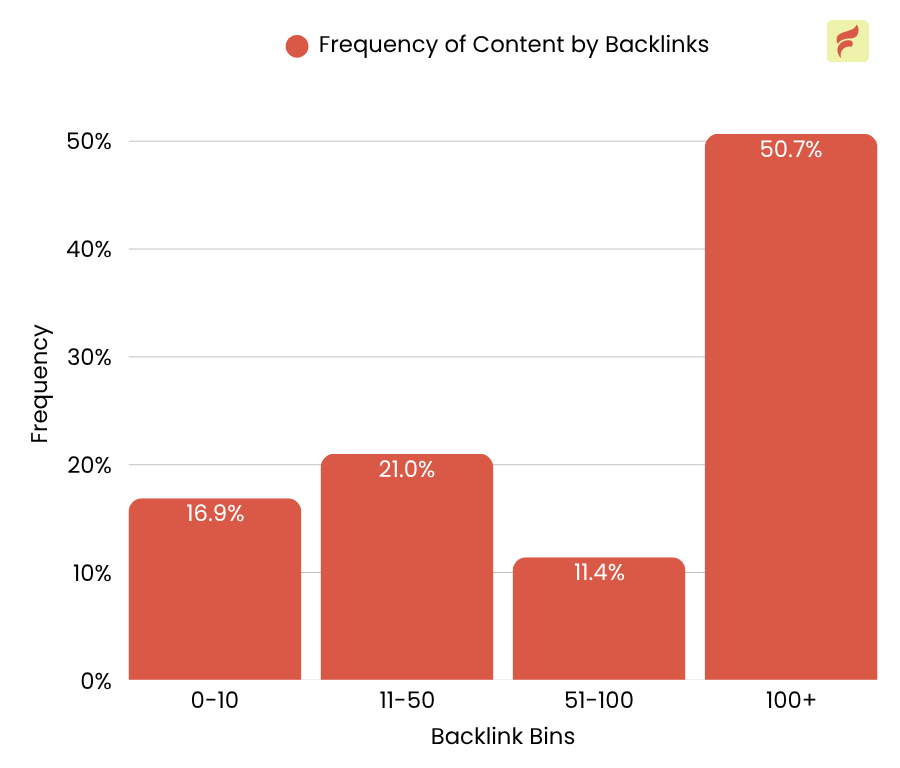
50.7% of websites featured in AI Overviews have 100 or more backlinks, and they tend to outrank sites with fewer links.
Another 32.4% have between 11 and 100 backlinks, while only 16.9% of AIO content comes from pages with 0–10 backlinks.
Key takeaway:
A strong backlink profile significantly increases your chances of ranking in AI Overviews. Focus on earning high-quality links to build authority and improve visibility.
“AI overviews are based on current SERPs. There’s no “if”—you’ll always find top-ranking sites on normal SERPs ranking in AI overviews, too. Sure, the order is a bit different, but the top sites are still there.
Therefore, when taking into account that PageRank, in other words, backlinks, are the fundamentals of SEO, as stated in the SEO Starter Guide by Google, that means that backlinks automatically translate to the main ranking factor in AI overviews as well.” — Bogdan Krstic, Owner, Krstic SEO
Most pages in AI Overviews have fewer internal links
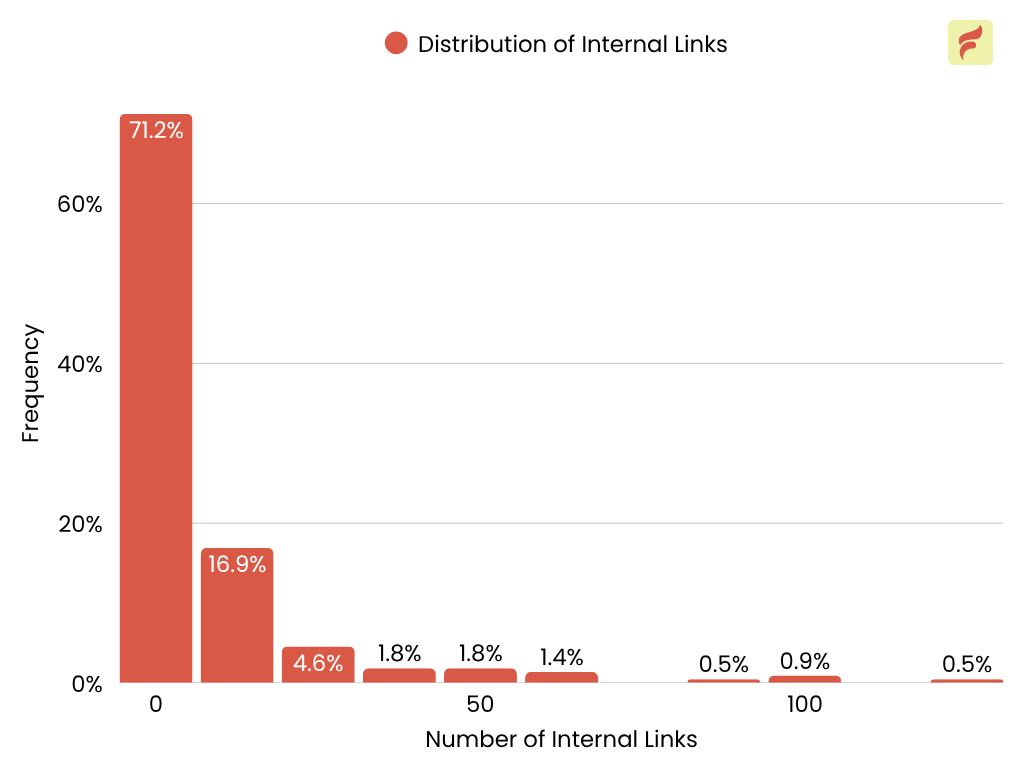
71.2% of pages in AI Overviews have between 0 and 10 internal links.
Only 16.9% have 11–20 internal links.
Pages with more than 50 internal links are extremely rare.
Excessive internal linking is uncommon, possibly because it can dilute link value and confuse both users and search engines.
Key takeaway: Over-interlinking can harm your SEO; instead, focus on linking to pages that add value and make sense.
“We’ve seen that tight internal linking around semantically related content clusters has had the biggest impact. When we grouped blog posts around specific keyword intents and ensured clear parent-child linking (with consistent anchor text), those pages started surfacing in AIOs — especially when supported by a strong informational page acting as a topical hub.
Also, pages with titles under ~60 characters and a clear meta description (even if not shown directly) tended to do better in AI summaries — likely because the AI pulls concise context early.” — Nikita Sherbina, Co-Founder and CEO, AIScreen
Most AIO content has few external links
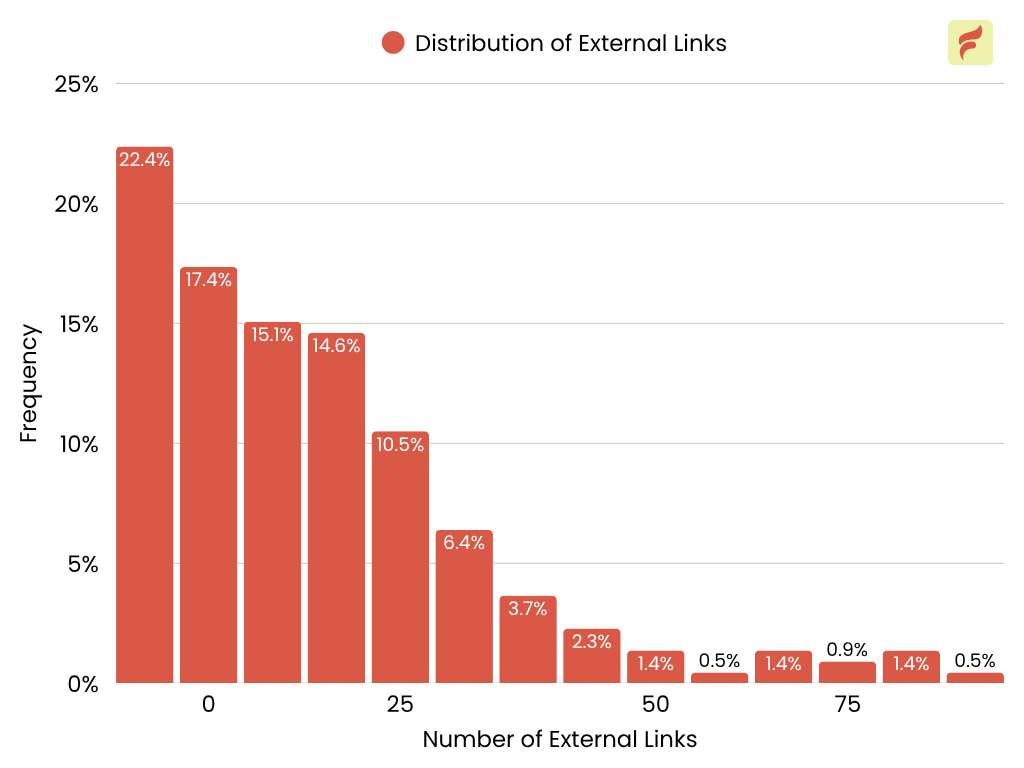
22.4% of AIO pages have just 0–10 external links. 17.4% have 11–20, and 15.1% have 21–30.
Another 14.6% fall in the 31–40 range, while only 10.5% have 41–50 external links.
The percentages continue to drop as the number of external links increases, with very few pages exceeding 70.
Most content featured in AI Overviews includes a moderate number of external links, typically between 1 and 40. This suggests that linking to relevant, authoritative sources is common among high-performing AIO content, but over-linking is rare for ranking in AI overviews.
Key takeaway: If you want your content to be considered for AI Overviews, aim for a balanced external linking strategy. Add external links to provide value and context, but not so many that it overwhelms the content or appears spammy.
Content ranking in AIOs has a moderate length
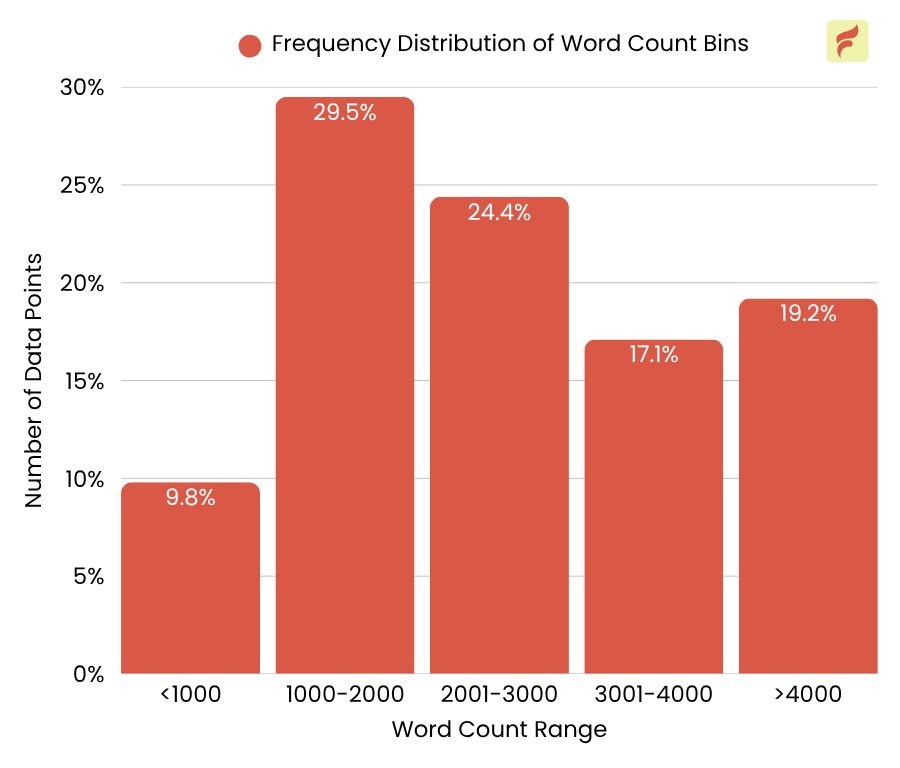
53.9% of content in AI Overviews has a word count between 1,000–3,000. This drops to 17.1% for content with 3,001–4,000 words.
This suggests that moderately in-depth articles are more likely to be featured, while excessively long content may not necessarily improve your chances of ranking in AI Overviews. Prioritizing clarity and relevance over sheer length appears to be more effective.
Key takeaway: Focus on delivering value over word count. Clear, relevant content is more likely to be featured in AI Overviews than lengthy articles with filler.
“I really believe that content length matters for ranking in Google’s AI Overviews. This format is generally weighted in favor of complete content at the risk of some clarity.
The exact length is subjective, to some extent, but shooting for a longer short-form is often helpful. Shorter pieces that don’t have much depth probably won’t cut it, but the trick is striking a balance.” — Dennis Shirshikov, Head of Growth and Engineering, Growth Limit
Title-query similarity is key but rare
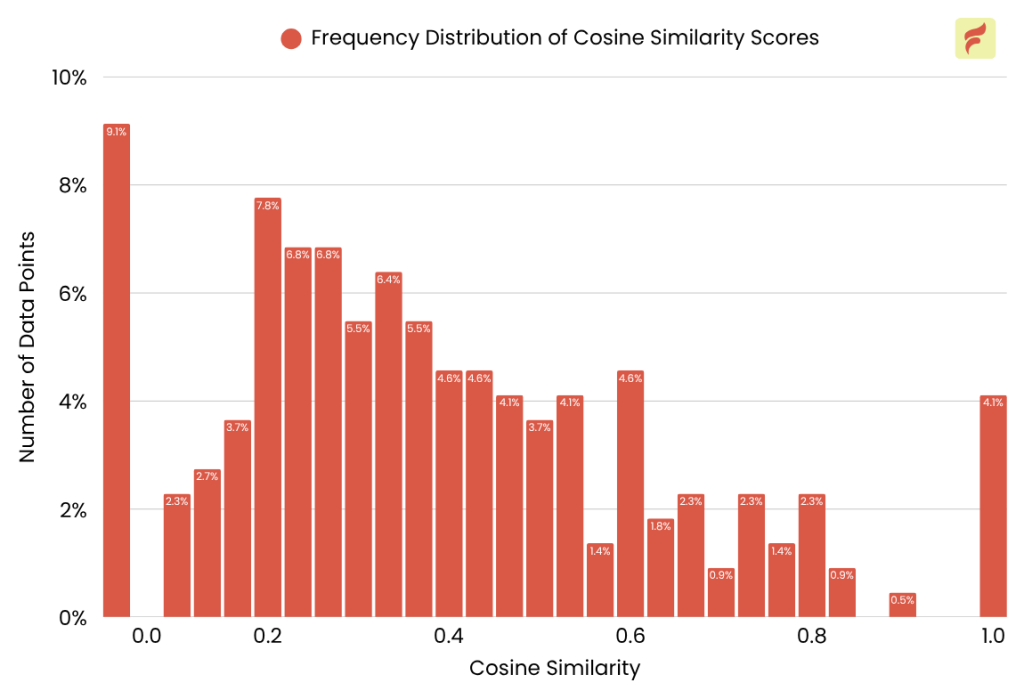
Top-ranking content titles are highly aligned with the user query. However, only 4.1% of all content achieves this high level of semantic similarity.
This gap presents a clear opportunity for publishers: to increase their chances of ranking in AI Overviews, they should create content that closely matches user intent and mirrors the exact language users are searching for.
Key takeaway: Focus on optimizing your titles for semantic relevance and content for search intent to increase the likelihood of being featured in AI-generated summaries.
“We’ve found that incorporating LSI keywords, semantically related terms and phrases dramatically improves the chances of content being featured in AI Overviews. Google’s AI systems don’t just look for exact match keywords anymore; they assess topic comprehensiveness.
By naturally weaving in related concepts, synonyms, and contextually relevant terms, you help the AI better understand the depth and relevance of your content. It’s not about keyword stuffing, it’s about language that mirrors real-world user intent.” — Kishan Soni, Sr. SEO Specialist at Dreamcast
Niche alignment matters
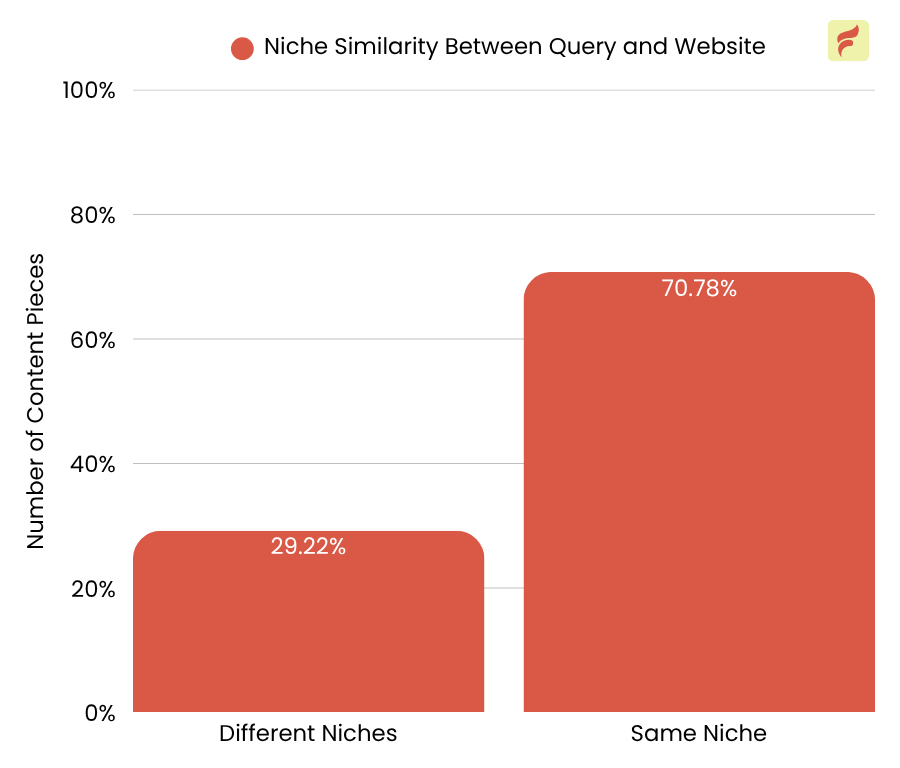
70.78% of content ranking in AI Overviews originates from websites whose niche closely matches the user’s query niche, while only 29.22% comes from sites in different niches.
This highlights the importance of topical relevance. Websites that are recognized authorities or specialists in the subject area of the query are far more likely to have their content featured in AI Overviews.
While less common, nearly a third of ranking content comes from sites outside the query’s niche, showing that it’s still possible for high-quality or relevant content from broader sites to appear.
Key takeaway: Prioritize building strong topical authority within your niche. Align your content closely with your site’s core focus to maximize relevance and trustworthiness in the eyes of AI ranking systems.
“One of the most consistent characteristics we’ve observed in content that appears in Google’s AI Overviews is a well-crafted title that closely aligns with search intent, particularly when supported by a strategically structured internal linking framework.
For example, a recent article we published titled “What Is AI SEO? Definition, Tools & Ranking Strategies” began ranking in AI Overviews for various queries. We believe this visibility was driven by three key elements:
- A title structure that reflects user questions and keywords;
- Clear semantic subheadings that anticipate follow-up queries;
- And a network of internal links using descriptive anchor text to reinforce topical authority.
These optimizations resulted in a noticeable increase in impressions for AI Overview-triggered queries, as seen in our Search Console data.” — Manpreet Kaur, Link Building Specialist, SEM Consultants
Page-level optimizations for ranking in AIOs
Google’s AI Overviews tend to favor established websites. Smaller sites need to invest in traditional SEO to rank. This means increasing domain authority through consistent content creation, technical optimization, and satisfying search intent with clear, helpful content that directly answers the query.
Building high-quality backlinks is also essential. Strategic networking and digital PR can help amplify your backlink campaigns and improve visibility. While AI Overviews may seem unpredictable, the fundamentals of SEO still apply. For smaller sites, focusing on quality and relevance is more important than ever.
Contact us if you need expert help to increase your website’s visibility for both bots and humans.